Research the civil rights movement in Baltimore
Student essays, an oral history interview list, and a timeline on the civil rights movement in Baltimore and Maryland, written in 2007 at Doris M. Johnson High School with the Maryland Historical Society. This is an independent reading archive restored from Wayback Machine captures.
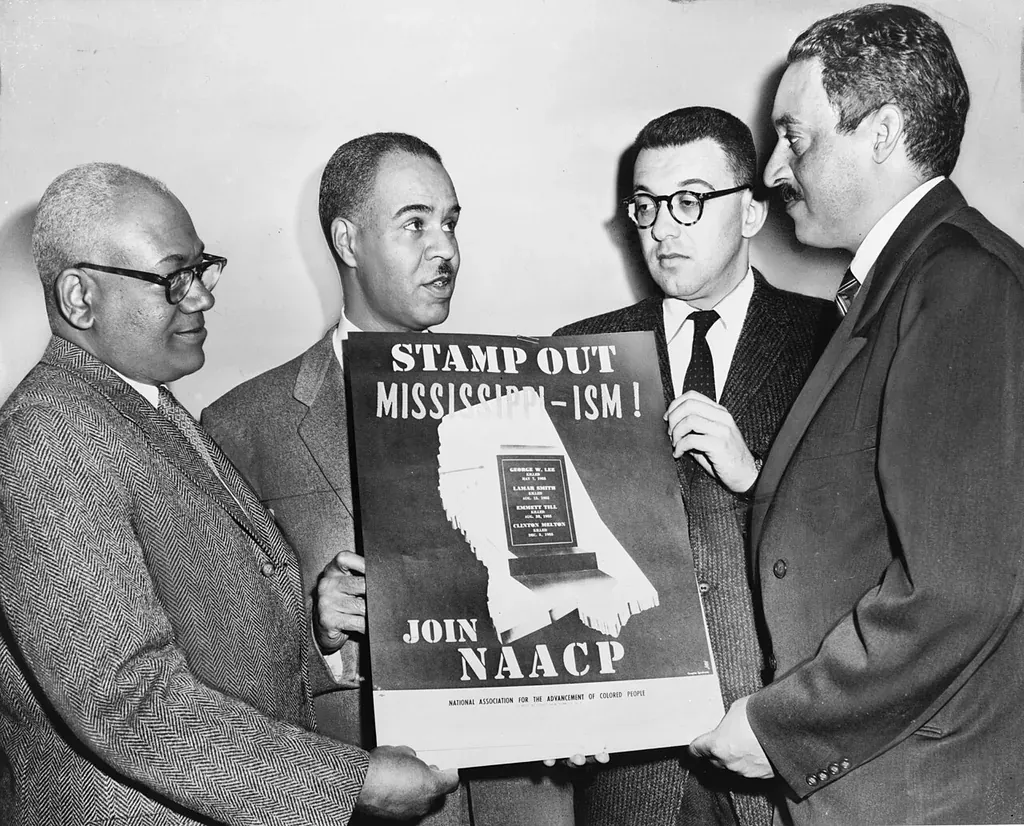
The material on this site comes from a three year collaboration between Doris M. Johnson High School in Baltimore and the Maryland Historical Society. The partnership began with a Save Our History grant won in 2004 to document the neighborhoods of northeast Baltimore. A later grant from the Annie E. Casey Foundation, distributed by Associated Black Charities, let the class turn to the civil rights movement in Baltimore and Cambridge. By 2007 the scope had widened to World War II era protests, the lynchings of the 1930s, and the Black Panther Party in Baltimore. The teacher, Mike Douglas, and his students decided that year to publish their work as a website alongside a printed book.
Each essay was written by a student and carries that student's name. The students worked from newspaper clippings in the Maryland Historical Society's vertical files, material from the Enoch Pratt Free Library, published histories, and oral history recordings held at MdHS. They also conducted their own interviews. Between April 2006 and April 2007 they sat down with James Griffin and Charles Mason of Baltimore CORE, Black Panther member Steve McCutchen, Gloria Richardson of Cambridge, Moses Newson, former executive editor of the Afro-American newspapers, Judge Robert Bell, Rev. Marion Bascom, Walter Sondheim, Jr., and several Morgan State alumni. Quotations from several of those conversations appear in the essays, and every essay closes with numbered endnotes listing its sources. Staff at MdHS guided the research, and the teacher singled out Naomi Coquillon for her guidance.
This site is an independent reading archive. It is not operated by the school, by the Maryland Historical Society, or by the project's sponsors. The pages were rebuilt from Wayback Machine captures of the original mdcivilrights.org, and the essays are reproduced as the students wrote them, including spelling, phrasing, and endnotes. A short reader's note above each page explains what it covers and where its sources came from. The interview page lists who was interviewed, by whom, and on what date, but the audio files were not preserved in the captures and cannot be played here. The timeline runs from the founding of the Afro-American in 1892 to the death of Walter Sondheim, Jr. in 2007. Photographs on this site are public domain images added during the restoration.
The essays
Who wrote them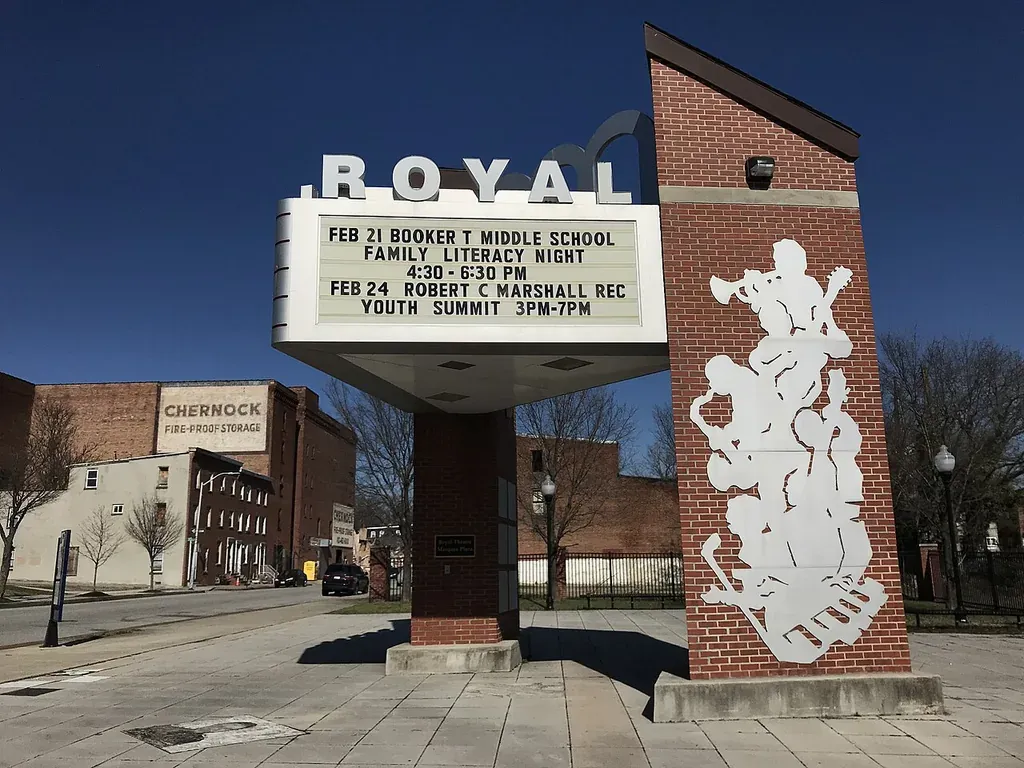 Neighborhoods
Pennsylvania Avenue
By Todd Sheridan, Felicia Harris, and Taivon MurpheyStudent essays trace Pennsylvania Avenue from a segregation era entertainment district of clubs and theaters to a street troubled by drugs and crime, with notes on groups trying to revive it.
Read the essaysThe PressCarl Murphy
John Murphy started the Afro-American in 1892, and his son Carl ran it from 1922 until 1957. The essay shows how the paper pressed for equal rights and covered stories other papers neglected.
ReadEastern ShoreLynchings on the Eastern Shore
By Samantha Porter and William MorganStudent essays examine the 1931 lynching of Matthew Williams in Salisbury and the 1933 lynching of George Armwood in Princess Anne, and the absence of any conviction in either case.
ReadSchoolsIntegration of the University of Maryland
By Arkeema ReidDenied admission in 1934 because of his race, Donald Gaines Murray won his case with NAACP lawyers, and the Court of Appeals of Maryland upheld the ruling in January 1936.
ReadProtestMarch to Annapolis
By Warren SweeleyIn April 1942 thousands supported a march to Annapolis against job discrimination and police killings of African Americans, and the governor responded with a commission and new Black police hires.
ReadSchoolsDouglass and Dunbar High Schools
By Mandela Brown and Kenneth GriffinTwo essays follow Baltimore's historic Black public high schools. Dunbar opened in 1934 and became tied to civil rights protest, while Douglass, founded in 1883, produced Thurgood Marshall and other notable alumni.
ReadSchoolsIntegration of Baltimore Polytechnic
By Violet Smith and Arkeena ReidIn 1952 African American students entered Poly's elite engineering course after an NAACP case and a 5 to 3 school board vote, two years before Brown v. Board of Education.
ReadFaithChurches in the Movement
By Janice BlizzardPlanning meetings, mass rallies and ministers' support put Baltimore's churches at the center of 1940s to 1960s protests, from Eleanor Roosevelt's 1944 visit to the Gwynn Oak Park demonstrations of 1963.
ReadProtestMorgan State Student Activism
By Jade ThompsonMorgan State students protested segregation in Baltimore for years before Greensboro, from downtown lunch counters to the Northwood Theatre, and created the Civic Interest Group to organize other students.
ReadProtestBlack Panthers
By Maryland Shaw and Epiphany ButlerStudent essays describe the Baltimore chapter's community programs and clashes with police, the case of Marshall Eddie Conway, and contrasting judgments of the Party from supporters and critics.
ReadOral historyIn Their Own Words
2006 to 2007Student interviewers spoke with civil rights participants, journalists, clergy and Morgan State alumni in 2006 and 2007. This page lists each interview with its date and interviewers.
See the interviewsTimelineTimeline
1892 to 2007Entries from 1892 to 2007 pair Baltimore and Maryland events, such as lynchings, desegregation of public places and the Cambridge protests, with national milestones like Brown v. Board of Education.
Open the timelineMaryland, year by year
Full timelineFrom the original front page
The information collected on this site is part of a three year collaboration between Doris M. Johnson High School and the Maryland Historical Society. This page is a collection of student work on African-American history and civil rights in Maryland. Please browse our pages to learn more about the topics listed above, listen to oral history interviews with civil rights activists from Baltimore collected from 2006-2007, visit our timeline of civil rights history, and learn more about us!
This project was made possible with a grant provided by the Annie E. Casey Foundation and distributed by Associated Black Charities.
Introduction
Our partnership began with a Save Our History grant we won in 2004 to document the neighborhoods of northeast Baltimore. In this project, the students, under my guidance and with the help of Maryland Historical Society staff member Jennifer Yaremczak, researched the history of their neighborhoods and conducted oral history interviews with neighborhood residents. It was a fascinating lesson in the history and struggles of everyday citizens in Baltimore.
With the success of this first project, we were able to win a grant from the Annie E. Casey Foundation to continue our research and oral histories, focusing on the civil rights movement in Baltimore and Cambridge. As my students did research, I learned along with them about the Route 40 Freedom rides, the integration of movie theaters conducted by high school and college students in coordination with community and civil rights groups, of the influence of the Afro-American newspaper, and of the struggles of African Americans outside of Baltimore to gain equality.
In addition, we have been fortunate to interview people who participated in these struggles who have shared their victories and struggles with us. For instance, a student of mine last year was doing research on the Cambridge riots and she read Gloria Richardson’s words, “all we want is freedom.” These words led to finding out how this mother went from a spectator to the movement, to being listed as number two on the Ku Klux Klan’s hit list behind Dr. Martin Luther King, Jr. It led to her to interview Mrs. Richardson and her daughter when Richardson visited family in Columbia, MD. Experiences like these, I think, help my students to understand, for maybe the first time, what it was like to be an African American during the time of the Movement.
We have continued our focus on the civil rights movement this year, but have expanded the scope of our research to incorporate studies of World War II era protests, lynchings in the 1930s, and the rise of the Black Panther Party in Baltimore. As part of this project, we were able to talk with former members of the Baltimore chapter of the Congress of Racial Equality, Morgan State University alumni, and a former member of the Black Panther Party. My students have continued to benefit from the opportunity to meet individuals involved in important events in their city.
In order to preserve my students’ work and to make it accessible to researchers, we decided this year to make this Web site in addition to creating a book as a final project. This site includes the students’ essays from this year, with photographs, as well as all of the oral histories we have collected over the past two years and a timeline of civil rights-related events in Baltimore and beyond. We hope this site will be valuable for anyone interested in the history of civil rights in our area.
My hope is to continue to learn, along with my students, about the events in the “Free” state that make us question phrases like equal justice under the law. And I hope that you come across a story that makes you read and research a topic in this book or on our Web site. My students and I would like to thank the staff at the MdHS for everything they have done for us, especially Naomi Coquillon for her excellence and guidance in this year’s project.
Strange Fruit 2007
In addition to the work described above, two students, Taivon Murphey and Mandela Brown, were inspired to create a song based on Billie Holiday's "Strange Fruit" as a result of their research during this project:
"Strange Fruit 2007" by Billie Holiday, Taivon Murphey, Nolan Jones, and Mandela Brown. The beat was remixed by Taivon Murphey from the original Strange Fruit song. Abel Meeropol wrote the music and the lyrics that Bille Holiday sang. The Lyrics were originally written by Taivon Murphey, Nolan Jones, and Mandela Brown. "Strange Fruit" was the most controversal song of the 1930s. The idea was to recreate the song for 2007 that would make people open their minds and listen to what we came from, Lynchings, Racism, and Segregation, to killing one another. The song was placed in a hip hop style only to reach listeners of All Ages & Race. We Hope that it makes a Change!!
Questions
Who produced the research on this site?
The material is student work from Doris M. Johnson High School in Baltimore, guided by teacher Mike Douglas, in a three year collaboration with the Maryland Historical Society. A grant from the Annie E. Casey Foundation, distributed by Associated Black Charities, made it possible.
What topics did the students research?
After a first project on northeast Baltimore neighborhoods, the class studied the civil rights movement in Baltimore and Cambridge, learning about the Route 40 Freedom Rides, movie theater integration and the Afro-American newspaper. The later work widened to World War II era protests, lynchings in the 1930s and the Black Panther Party in Baltimore.
What does the archive include?
It includes the students' essays from the final year, with public domain photographs added in the restoration, a list of the oral histories collected over two years (the audio was not preserved), and a timeline of civil rights related events in Baltimore and beyond. The interviews were with civil rights activists from Baltimore, collected from 2006 to 2007.
Students often reach this archive while writing about the people in it. A method for writing a life as an essay helps more than another timeline, and an essay tutor can read a draft first.