Integration of the University of Maryland
Denied admission in 1934 because of his race, Donald Gaines Murray won his case with NAACP lawyers, and the Court of Appeals of Maryland upheld the ruling in January 1936.
Arkeema Reid's essay follows Donald Gaines Murray, a Douglass High School and Amherst College graduate, from his December 1934 application to the University of Maryland law school through the NAACP case argued by Thurgood Marshall and Charles Hamilton Houston before Judge Eugene O'Dunne in June 1935, to the Court of Appeals ruling of January 15, 1936 that confirmed his admission. Sources include David Bogen's 1989 article in Maryland Historical Magazine, 1986 obituaries from Enoch Pratt Free Library files, Maryland State Archives documents, and Barbara Mills's history. The essay refers to a copy of Murray's letter at its end; that attachment is not part of the captured page.
In 1934 an African American male, Donald Gaines Murray, tried to gain entrance into the University of Maryland’s law school. This was not an easy task and along the way Murray fought many battles.
Murray’s case was not the first time the law school had been integrated. “In 1889, two black students had graduated from the school. Two other black students attended during the next academic year, but the law school then excluded them and all other blacks until Murray reopened the doors.”1 During this time the Law school was a private institution and the law school didn’t become public until 1920.2
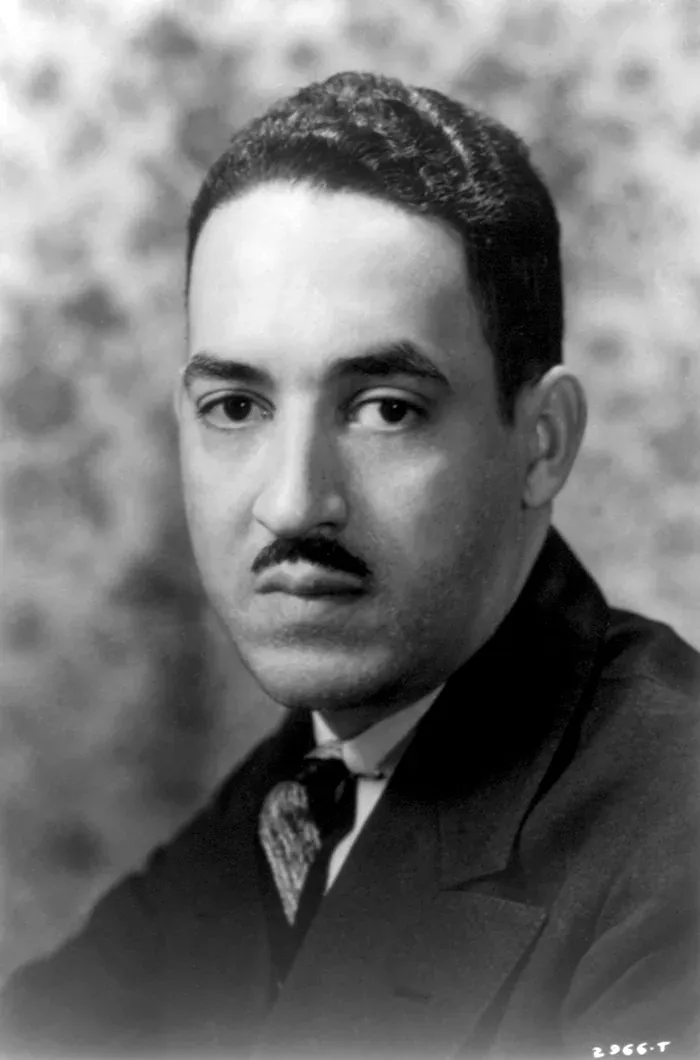
Murray was born in Philadelphia but he was raised in Baltimore by his grandparents and he graduated from Frederick Douglass High School.3 After high school, Murray graduated from Amherst College and decided to enter the University of Maryland Law School, but when he applied he was denied entrance because of his race.4
In December of 1934, Murray wrote a letter to the Dean of the University of Maryland’s Law School, asking for admittance (Letter located at the end of the essay). He was denied by the President of the Law School, R.A. Pearson. President Pearson, in a letter to Murray, suggested he attend the Princess Anne Academy which is a separate institution of higher learning for the education of Negroes.5
This rejection letter didn’t stop Murray from gaining admission to the school of law. Murray did not come from a wealthy family so he needed help to win this fight. In stepped the National Association for the Advancement of Colored People and its team of lawyers to help Murray.
Thurgood Marshall counseled for the Maryland branch of the NAACP and introduced Murray’s argument in Baltimore City Court on June 18, 1935 before Judge Eugene O’Dunne. While Marshall introduced it, Charles Hamilton Houston, who was the special counsel for the NAACP, made the argument.6
Murray’s team of lawyers made its case and was successful. They won “since the state had no provision for establishing another law school equal to that of the University of Maryland.”7 On January 15, 1936, Judge O’Dunne’s decision was upheld by the Court of Appeals of Maryland and this cemented Murray’s entrance into the University of Maryland’s law school.8
After Murray gained entry to the law school, the Baltimore Afro-American, in an editorial, stated the following, “This State university, supported by taxpayers to the tune of over a million dollars every two years, has considered itself a university for white people only, thereby robbing 300,000 colored persons of their rights and privileges as citizens and taxpayers.”9
Murray’s determination to seek an equal education and opportunity and his persistence and legal fight to attain it, tells a lot about him. Murray realized his story couldn’t be told without the help of the NAACP, Marshall and Houston. Murray’s fight changed the college acceptance system in Maryland and allowed the current generation of African American’s an opportunity to attend any public law school.
Notes
- David Skillen Bogen, “The First Integration of the University of Maryland School of Law,” Maryland Historical Magazine, Vol. 84 (Spring 1989), 39.
- Ibid, 46.
- Letter from the Office of the President of the University of Maryland, December 14, 1934, “From Segregation to Integration: The Donald Gaines Murray Case,” Maryland State Archives http://www.msa.md.gov/msa/stagser/s1259/121/1844/html/0000.html (cited 29 Apr. 2007).
- Barbara Mills, “Got My Mind Set On Freedom”: Maryland’s Story of Black & White Activism, 1663-2000 (Bowie, MD: Heritage Books, Inc.), 353.
- Ibid.
- Ibid.
- “Md. U. Defended Lily-White Policy with Wooden Guns” Afro-American 22 June 1935, “From Segregation to Integration: The Donald Gaines Murray Case,” Maryland State Archives http://www.msa.md.gov/msa/stagser/s1259/121/1844/html/0000.html (cited 29 Apr. 2007)..
3.“Donald Gaines Murray Sr. Dies at 72; Sued, Entered UM Law School in 1935,” 10 April 1986, V.F.—Murray, Donald Gaines, African American Special Collection, Enoch Pratt Free Library.
4.“Donald G. Murray Remembered Thurs. During Impressive Rites,” 12 April 1986, V.F.—Murray, Donald Gaines, African American Special Collection, Enoch Pratt Free Library.
Questions about this page
Why was Donald Gaines Murray denied admission?
Murray was denied entrance to the University of Maryland law school because of his race. President R. A. Pearson, in a December 1934 letter, suggested he attend the Princess Anne Academy, a separate institution of higher learning for the education of Negroes.
Who argued Murray's case?
Thurgood Marshall counseled for the Maryland branch of the NAACP and introduced Murray's argument in Baltimore City Court on June 18, 1935, before Judge Eugene O'Dunne. Charles Hamilton Houston, special counsel for the NAACP, made the argument.
How was the case decided?
Murray's lawyers won because the state had no provision for establishing another law school equal to that of the University of Maryland. On January 15, 1936, the Court of Appeals of Maryland upheld Judge O'Dunne's decision, which cemented Murray's entrance.